
Visitors to Tuscany have fortune, for they will dine well almost anywhere. Basic ingredients taste great in a region where food and drink have an unmistakable sense of place. However, for an elevated experience where your taste buds are taken to the next level, dine at Silene, the deserved holder of one Michelin star.
Located in the small village of Pescina, near Seggiano on the slopes of Monte Amiata, chef-patron Roberto Rossi and his team have turned traditional Tuscan country cooking into a refined, contemporary fine-dining experience. The menu heavily features local ingredients, seasonal garden vegetables and home-baked bread. Every dish is accented with the chef’s own extra virgin olive oil produced from local Seggiano olives. At certain times of the year, guests can tour the property’s artfully designed vegetable and herb garden.
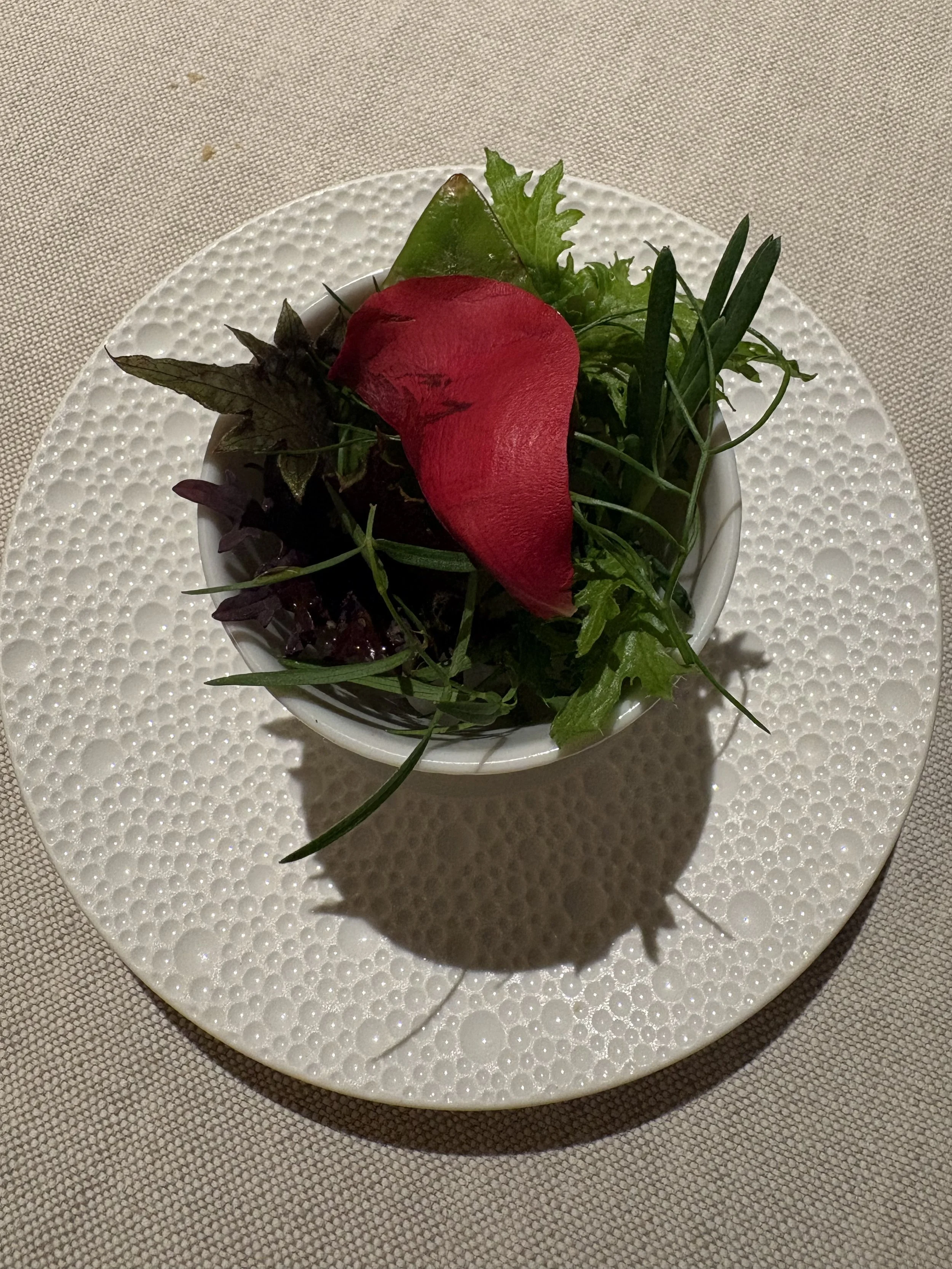
To understand the joy of Silene, then look no further than these foundational ingredients. Our visit fortuitously coincided with the recent first press of the season’s olive oil. Pour it liberally over fresh sourdough, sprinkle with salt, and prepare to experience something quite unlike the olive oil most of us know. There is an extraordinary purity, followed by a lingering peppery tang and hints of garlic and basil. Consider next an amuse bouche of salad leaves. Boring this was not. Sensational might be a better adjective.
And this was just the beginning. There is an inherent playfulness combined with a confidence in artful cooking displayed across the menu. We were told to eat our salad leaves with tweezers. Obligatory bibs which say “yes, I am at Silene” are provided to accompany a soup dish. One of our desserts is called “Oops, I dropped a vase.” An eight-course tasting menu is the only way to experience Silene properly.
A classic case study might be the first starter enjoyed on our visit. This is a panettone dish accompanied by mayonnaise, anchovies, raisins and peanuts. None of these ingredients ought to go together, but at Silene, they harmonised perfectly, combining bitter, salt and sweet elements with the oily fish providing notable astringency.
Diners will not go hungry at Silene, for both risotto and spaghetti dishes feature (the former a wonderfully bright orange iteration, with all the colour apparently from pumpkin) even before the first meat was served. Lamb tasted delicate and juicy, while rabbit was enhanced by fresh mushrooms and a lingering lavender sensation. The herb grows locally in the hills as does the wild silene plant – hence the restaurant’s name – which features prominently in spring menus.
Three hours is needed for the full Silene experience and will set you back around eu200/head for food alone. We brought our own wines but the list at the venue is comprehensive. The only danger at Silene is that you might leave too full but almost certainly very content.